Globelink Group E-News : Volume 278 | September 2026

Visit our website
Follow us on
Visit our website
Follow us on

www.globelink-group.com


Country Focus - PakistanGlobelink Pakistan Pvt Ltd, was formed in 1997 and we have evolved over the years to become a leading Non -Vessel Operating Common Carrier (NVOCC) operator in Pakistan.
Globelink Pakistan offices:
• Karachi (Country Head office) Pakistan operates three main international deep-sea ports:
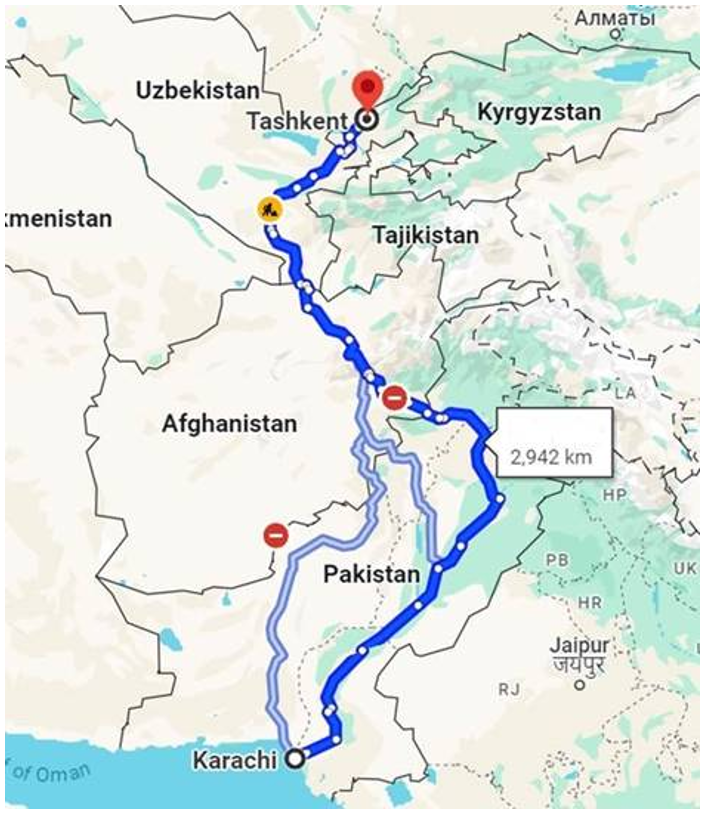
1. Karachi Port 1) Karachi Port Karachi Port has two main wharves — East Wharf, with seventeen vessel berths, and West Wharf, with thirteen vessel berths and three liquid cargo berths for POL and non-POL products. The port also has three private container terminals: • Karachi International Container Terminal (KICT) Karachi International Container Terminal (KICT – Hutchison Ports) Karachi Gateway Terminal Pvt Ltd (KGTL – East Wharf) South Asia International Container Terminal (SAPT – East Wharf, Hutchison Ports) 2) Port Qasim Authority (PQA) The port is well connected to the hinterland through all modes of transportation, linking directly to the national highway and motorway networks leading to Afghanistan, the Central Asian Republics (CARs), and CPEC routes. It also connects to the national railway network via a dedicated 14-km railway line and station. Operating 24/7, Port Qasim is truly the "Gateway to National Prosperity." Qasim International Container Terminal Ltd. (QICT) 3) Gwadar Port Gwadar Port is set to become a gateway port for Pakistan and the wider region, and an excellent maritime hub. As the country's first deep-sea port, it complements Karachi Port and Port Qasim in driving economic growth — for Pakistan generally and Balochistan specifically — by utilizing domestic resources and providing an outlet for the landlocked Central Asian states, Western China, and Afghanistan through transit trade and transshipment facilities. Its mandate is to operate efficiently, effectively, competitively, transparently, and fairly for all stakeholders. Gwadar Port became fully operational on 31 May 2021, including the launch of online booking for cargo delivery. Gwadar is home to multiple mega-projects under the China-Pakistan Economic Corridor (CPEC), several of which are already complete, with more in the pipeline for future development. Additional capabilities include full customs formalities and transshipment handling from every Turkish port, plus a 1,200 m² bonded warehouse dedicated to LTL consolidation and cross-docking. COMPREHENSIVE SERVICE COVERAGE Globelink Pakistan, together with the CWT Globelink group, is committed to connect our customers' cargo to anywhere in the world. Through our strong network of offices, efficient transshipment hubs, well-connected inland distribution points, quality agents, and integrated freight management systems, Globelink Pakistan delivers reliability, efficiency, flexibility, and best-in-class value-added services — living up to our motto: "In Unity, We Link the Globe." In addition to NVOCC services, Globelink Pakistan handles project cargo and value-added activities including repacking, re-palletization, customs clearance, and door-to-door transportation to meet all customer requirements. The group also delivers multi-modal transportation solutions spanning air freight, sea freight (LCL and FCL), and land transportation. With direct access to every major gateway in the country through the ports — Karachi Port, Port Qasim, Gwadar Port— plus established transit routes into Afghanistan, Central Asia, and Western China, Globelink Pakistan is uniquely positioned to move your cargo faster, safer, and more reliably than any single-port or single-mode provider. NICHE TRADE LANES Globelink Pakistan offer a dedicated service for ATT (Afghanistan Transit Trade) cargo — covering United Nations cargo, commercial, and non-commercial shipments. Pakistan, Afghanistan, and Uzbekistan have established a trilateral trade working group to leverage each country's strengths and expand regional trade access. The initiative reflects the shared strategic vision of Uzbekistan and Pakistan's leadership toward greater regional connectivity. Under this framework, the working group arranges transit exclusively for FCL containers/shipments moving to Uzbekistan via Afghanistan. Process Flow 1. Import cargo from Karachi to Peshawar Routing & Transit Time
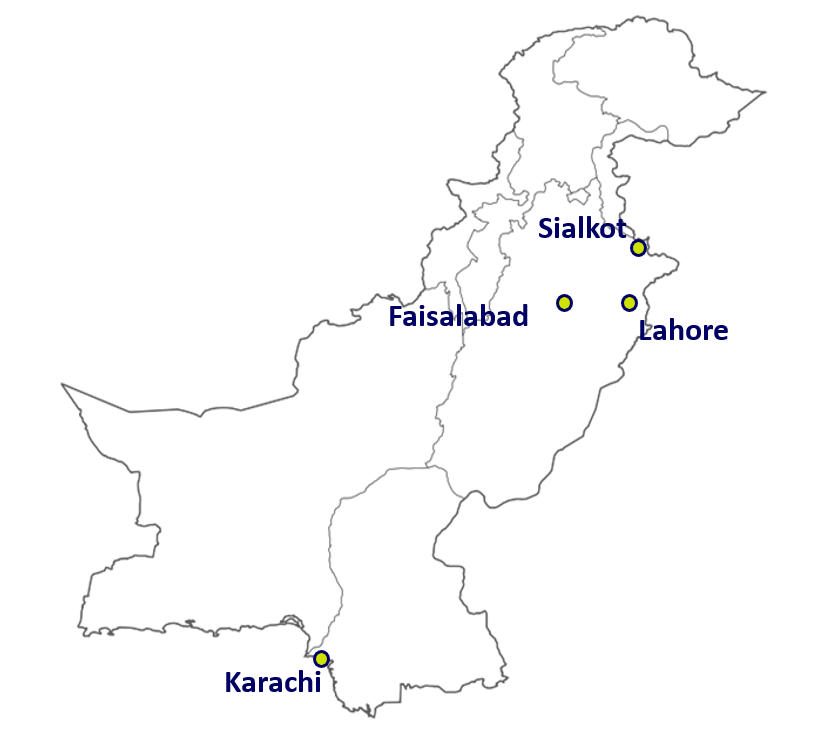
IT CAPABILITIES THROUGH THE WEB PAGE Our online Track and Trace system allows full traceability of import/export operations, from origin to destination, and ensures the safe delivery of your cargo. Customers will be able to access pictures of their cargo, and able to inform if the end user has removed the goods from the destination warehouse. These unique features differentiate Globelink Pakistan as the market leader at the forefront of technologies development amongst the maritime neutral consolidators in Pakistan. For more information on our Globelink Pakistan offices, you may contact the following: Karachi Office – Country Head Office Lahore Office Sialkot Office Faisalabad Office |
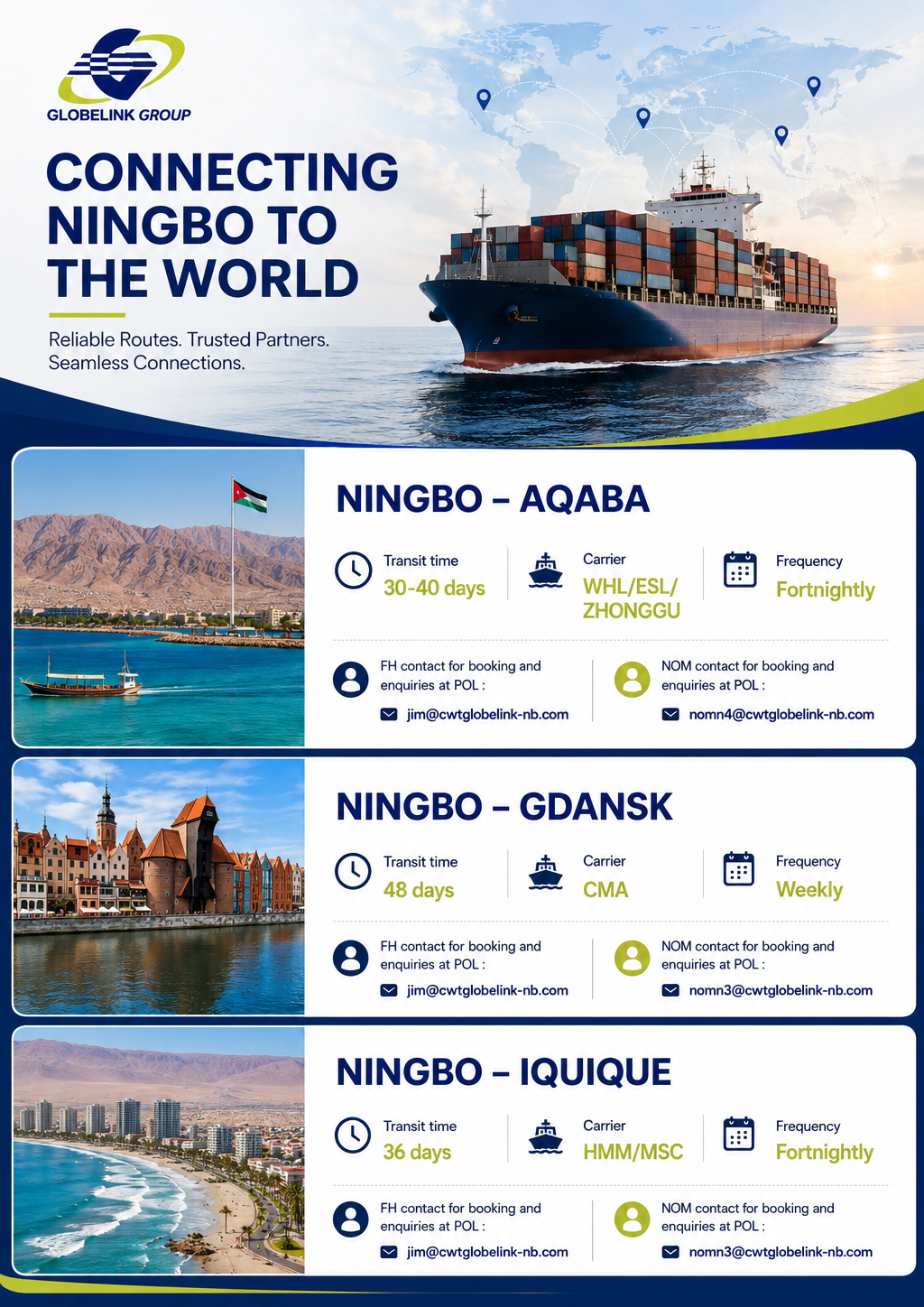
*NEW* Connecting Ningbo to the World 🌏🚢Expand your shipping possibilities with our regular services from Ningbo to Aqaba, Gdansk and Iquique. With weekly and fortnightly sailing, trusted carrier partners and dedicated local support, we provide reliable connections to keep your cargo moving.
📩 Contact our Ningbo team for bookings and enquiries. |
Notice: Advance Cargo Declaration (ACD) For Imports Into KenyaThe Kenya Revenue Authority (KRA) has announced the implementation of a new Advance Cargo Declaration (ACD) platform for all cargo destined for Kenyan ports with immediate effect. Kenya Advance Cargo Declaration (ACD) • Registering an account on the KRA ACD Portal https://acd.kra.go.ke
4. Required documents include: • Draft Bill of Lading 5. The ACD application must be submitted using the registered account of the actual shipper/exporter shown on the Bill of Lading. Applications cannot be submitted using a freight forwarder's account on behalf of the exporter. |
e-Services
Social Media
You may access
e-Schedules, e-Services, Track & Trace
via our website: www.globelink-group.com
Follow us on the following social media platforms: